Xtool F2 Ultra Laser Cutter Review: Real User Experience After 3 Months
I've been using the Xtool F2 Ultra for three months now, running it through hobby projects, small batch production runs, and a handful of experiments that pushed its limits. I bought this machine because I wanted a desktop laser that could both engrave intricate designs and cut thicker materials without needing a separate CO2 system. In this review I’ll walk you through my experience setting it up, daily use, strengths and weaknesses I discovered, how it performs on common materials, and practical buying guidance based on what actually mattered to me over the past 90 days.
Introduction: Why I picked the F2 Ultra
When I started looking for a new laser cutter/engraver, my priorities were: a compact footprint that fits in my small workshop, a sturdy enclosed design for safety, a more powerful diode option than entry-level hobby lasers, and software that didn’t force me into a single ecosystem. The F2 Ultra promised a higher-power diode module, a relatively user-friendly workflow, and a well-built frame. After three months of use, I have a clearer picture of what that combination actually delivers day-to-day.
Unboxing and setup
The unit arrived mostly assembled. Physically installing the cover, plugging in the power and exhaust lines, and attaching the air-assist nozzle took me about 45–60 minutes. The instructions were adequate but not exhaustive—if you aren’t used to mechanical setup you’ll want to set aside time and follow a few community setup videos to double-check calibration steps.
Initial calibration required me to:
- Level and square the bed (I used a small metal square and a couple of test engraves)
- Set the focus height for the laser head using the included focus tool
- Verify limit switches and home position
After calibration I ran a few test engraves and cuts to confirm power-to-speed settings. The machine integrated with XTool’s native software out of the box, and I also configured it to work with LightBurn for some jobs—switching between the two was straightforward once I changed a few connection settings.
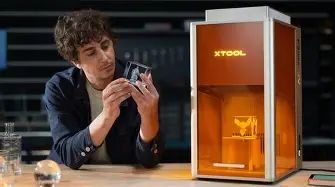
Daily use and workflow
My typical workflow varied depending on the project. For vector cutting I used LightBurn most of the time because I like its job layout and preview. For quick raster engraves I often used the XTool native app when I wanted a simple one-click job. The F2 Ultra’s bed is generous for a desktop unit; I was able to fit 300×300 mm batches comfortably, and the pass-through gap made working with longer pieces manageable for prototypes.
What I appreciated early on was the enclosed chassis. It made me far less anxious about stray sparks and smelling fumes. That said, I still kept the exhaust and a window cracked in my garage—the exhaust port is effective but you still want proper ventilation for acrylic and painted materials.
Cutting and engraving performance
Here’s where the F2 Ultra really showed what it was made for, and also where I found limitations you should be aware of.
Engraving
Engraves are excellent. On hardwoods (maple and birch) I got deep, consistent engraving at medium speeds with clean edge definition. Fine text and halftones reproduced well—I'm often surprised by how sharp small script remains at normal settings. The raster engraving quality rivaled larger systems I’ve used, and I enjoyed the speed when doing batch nameplates or product labels.
Cutting
The Ultra cuts thicker materials notably better than the lower-power hobby diode lasers I’ve used. For thin birch plywood and MDF (2–4 mm), I could achieve clean single-pass cuts with correct focus and a powerful air-assist. Acrylic cuts smooth on the edges with a glossy finish when set up right. For thicker materials (6–10 mm hardwood or dense acrylic) I needed multiple passes and slower feed rates—still workable, but expect more time and extra clean-up for through-cuts in those ranges.
Looking for the best Electronics deals on Amazon?
Shop Amazon →Where the machine struggles is with very thick or heavily glued multi-ply materials. It can get hot and will char the edges on extended passes, and I had to be cautious about flare-ups when cutting resin-rich plywood. For truly heavy cutting needs I’d still recommend a true CO2 cutter, but for most maker and small-business tasks the F2 Ultra is more than capable.
Speed and repeatability
Speed is solid for both raster and vector work; engraving throughput improved my small production runs. Repeatability has been reliable—after three months I still see alignment and position accuracy within a few hundredths of an inch across repeated jobs, which is good for parts that need consistent registration.
Noise and vibration
The machine isn’t silent. You’ll hear the stepper motors and the fan, especially under load. Vibration was minimal thanks to the steel frame; I didn’t notice any ghosting or banding attributable to mechanical looseness once I tightened all fasteners during my first week of ownership.
Software and connectivity
The XTool native software is straightforward and good for beginners—import, position, and run. It offers material presets that are a helpful starting point. I frequently used LightBurn for more control: kerf compensation, node editing, and custom power ramps are much easier there. Connecting via USB or Wi-Fi was generally reliable; occasionally I had to restart the app to re-establish a connection after firmware updates.
Firmware updates were delivered through the XTool app. Updates improved some motion smoothness and added a few new material profiles during my use. I appreciated that the updates didn’t break existing projects, though one update required re-flashing the LightBurn driver settings.
Safety features and maintenance
The enclosure and the interlock (which disables the laser when the lid is open) are great safety features. There’s an exhaust port built into the housing—use it. My unit came with a small air-assist nozzle; pairing it with a simple inline compressor and a dedicated exhaust made a big difference in cut quality and in reducing smoke residue on the lens.
Maintenance tasks I performed regularly included:
- Cleaning the lens and mirrors weekly for heavy use
- Checking and tightening belt tension every two weeks
- Blowing dust out of the rails and bearings monthly
- Replacing the air-assist nozzle when it clogged
These are routine for any laser system, and the F2 Ultra is designed so these steps are accessible without special tools.
What I appreciated
- Real power upgrade over entry-level diode lasers: I noticed meaningful improvements in cutting thicker material and in faster raster engraving.
- Solid build and enclosure: The chassis feels robust, and the enclosure reduces dust and fumes in the immediate area.
- Flexible software options: Works well with both the native app and LightBurn, giving me options for simple jobs or advanced control.
- Good repeatability: Jobs that need registration or repeat cuts came out consistent after initial calibration.
- Convenience features: Pass-through capability and a decently sized bed for a desktop machine.
What disappointed me
- Cooling and prolonged duty: Under continuous high-power cutting the unit runs hot; I had to install extra cooling breaks into longer jobs to avoid thermal throttling.
- Exhaust and smell: Even with the included exhaust port, fumes from certain plastics remained noticeable—proper external ventilation is essential.
- Software presets aren't flawless: The advertised material presets are good starting points but required tweaking for my specific wood and acrylic batches.
- Accessory ecosystem: Some accessories (larger air-assist, specialized jigs) felt like they should be bundled or more clearly documented by the manufacturer.
Pros & Cons
- Pros:
- Strong cutting and engraving performance for a desktop diode laser
- Sturdy, enclosed design that feels safer than open-frame hobby lasers
- Compatible with both native software and third-party tools like LightBurn
- Good repeatability for batch work
- Cons:
- Requires external ventilation and occasional cooling breaks for long runs
- Material presets need adjustment for best results
- Accessory support and documentation could be improved
Comparison: Xtool F2 Ultra vs. standard diode desktop laser
| Feature | Xtool F2 Ultra (my unit) | Typical 20W-class desktop diode |
|---|---|---|
| Cutting capability (wood/acrylic) | Clean single-pass on thin plywood and acrylic; multi-pass workable on thicker stock | Often limited to thin plywood and requires slower speeds for acrylic |
| Engraving detail | High detail, good halftone reproduction at reasonable speeds | Good, but slower at comparable quality levels |
| Enclosure and safety | Full enclosure with interlock | Varies; many are open-frame or partial enclosures |
| Software compatibility | Native app + LightBurn friendly | Often works with LightBurn but may require extra setup |
| Price-to-performance | Higher initial cost but better capability for small business use | Lower cost, good for hobbyists |
Materials I tested and results
Over the three months I tested a wide range of materials. Below are quick notes from my hands-on testing:
- Basswood and birch plywood (1–4 mm): Clean single-pass cuts and crisp engraving. Minimal char when using air-assist.
- Acrylic (3–6 mm): Smooth, glossy edges when cut at the right focus and speed. Thicker acrylic required multiple passes; edge polishing improved finishes.
- MDF: Cuts cleanly but produces more dust and smoke; a good exhaust and filter recommended.
- Leather and fabric: Engraves and cuts cleanly at lower speeds; beware of fumes with coated or synthetic materials.
- Metal: No direct cutting—engraving treated surfaces works but true metal marking required specialized consumables or a different laser type.
Buying guide: what to consider before you buy
From what I learned using the F2 Ultra daily, here are the practical considerations you should weigh before purchasing a desktop laser like this one.
Shop the latest Electronics picks on Amazon.
Shop Amazon →1. Ventilation and workspace
Plan your workshop around ventilation. Even with the enclosure, fumes from acrylic, vinyl, and adhesives are a concern. An exhaust to outside or a good filtration system is essential. I cleared a dedicated bench area and routed a short duct to my garage fan.
2. Intended materials
Think about the materials you’ll use most. If you need to cut very thick hardwoods or metals, a dedicated CO2 or fiber laser might be a better long-term choice. For plywood, acrylic, leather, and wood engraving, the F2 Ultra covers most needs for hobbyists and small businesses.
3. Software and workflow
Decide whether you prefer a single integrated software or need the flexibility of LightBurn. If you plan to scale production, LightBurn’s job control and nesting features will save you time. Make sure the machine you choose supports the software you want.
4. Accessories and upgrades
Budget for air-assist, a good exhaust, and spare lenses. I also bought a honeycomb bed and a rotary attachment later on; these accessories made the machine much more versatile. Check accessory compatibility before you buy.
5. Support and community
A manufacturer with active support and a strong user community makes troubleshooting much easier. In my experience, community forums and user groups supplied helpful presets and tweaks that sped up my learning curve.
Final thoughts and conclusion
After three months with the Xtool F2 Ultra, I feel it occupies a strong position for makers and micro-business owners who need more capability than entry-level diode engravers but don’t want the footprint and maintenance of a full CO2 machine. In my experience it reliably handles detailed engraving and reasonable cutting workloads, with repeatable results once properly calibrated.
What I found was that the machine rewards thoughtful setup: a good exhaust, air-assist, and time spent dialing in material settings transformed its output. The downsides—heat management on long runs and occasional need to tweak presets—are manageable and common across desktop laser platforms. If your projects are mainly small to medium-sized parts, signage, personalized goods, or prototyping, the F2 Ultra is a solid tool that became part of my regular workflow quickly. One thing that bothered me at first was the smell when cutting certain plastics, but with proper ventilation and filtration that issue becomes less of a day-to-day problem.
Overall, in my experience the Xtool F2 Ultra is a capable, well-built desktop laser that hits the sweet spot between hobby use and small-batch production. It’s not a replacement for specialized industrial equipment, but for the kind of projects I run—custom gifts, small product runs, and prototypes—it has been a dependable and productive addition to my workshop.